Published:2026-08-24
Keywords:Nano Banana Pro, Nano Banana, Nano Banana official website, podcast cover, audio brand, nanobanana prompts
Podcasters, audiobook creators, and audio-course producers often get stuck when “covers do not look professional”: hiring a designer for show art is expensive, and every seasonal color refresh needs a redo; DIY templates rarely match Spotify, podcast apps, and YouTube channel headers. Show covers, episode thumbnails, and social promo graphics end up mismatched — listeners do not feel “this show is worth tapping” at first glance in the subscription list.
Among the capabilities on the Nano Banana official website, Nano Banana is ideal for quickly testing layout and palette directions, while Nano Banana Pro is better at locking host likeness, title safe zones, and brand palettes, so covers, episode art, and channel banners feel like “one audio brand system.” I use this workflow for indie podcasts and knowledge channels to ship “listing-ready” cover assets — from uploading a host photo/Logo to exportable output, usually in 10–20 minutes.
This is a brand-new podcast cover and audio channel brand deep-dive (different from past product packaging mockups, wedding invitations, ebook covers, or video thumbnail topics). Full prep checklist, four-step workflow, three prompt templates, brand-lock tips, three case breakdowns, and a pitfalls table.
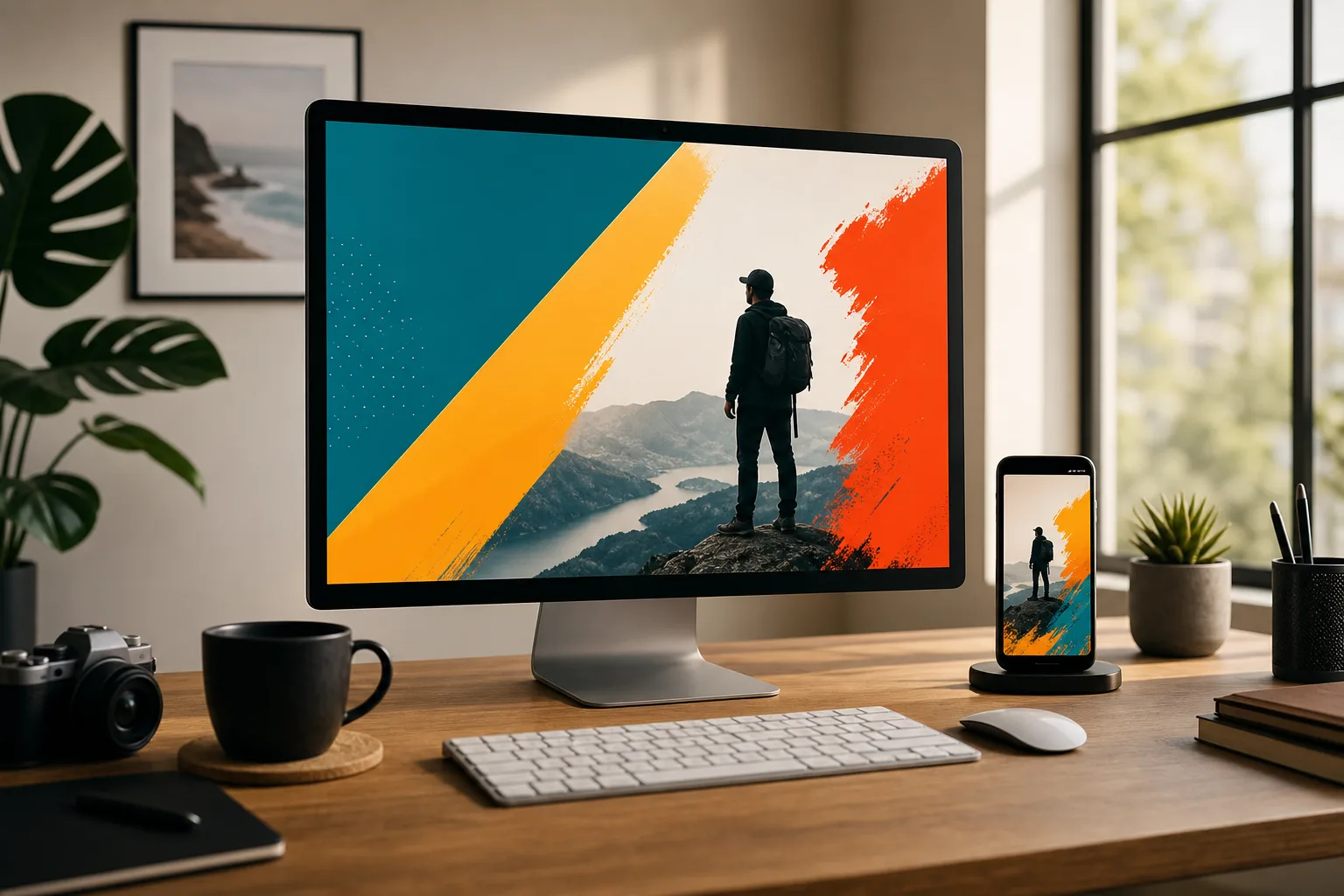
1. Why use Nano Banana / Nano Banana Pro for podcast covers?
Nano Banana standard is ideal for “try 5 layouts and palettes first”; when you need undistorted faces, usable title space, and a coherent series, switch to Nano Banana Pro:
| Capability | Outsourced design / basic gen | Nano Banana / Nano Banana Pro |
|---|---|---|
| Identity fidelity | Every revision needs a designer rebook | Natural language keeps host/Logo proportions |
| Title negative space | Frame packed — hard to overlay show name | Fixed title safe zone |
| Series unity | Every season has different lighting | Fixed palette and composition anchors |
| Multi-channel specs | Manual crop cuts off faces | 1:1 show cover / 16:9 banner / episode thumbnail |
| Revision speed | Wait for designer availability | “Darker background, larger title zone” conversational iterate |
The core difference: in the workflow on the Nano Banana official website, a podcast cover is not “a random image” — it is a reusable audio brand visual asset.
2. Asset prep checklist (what decides whether it “looks like this show”)
Before opening Nano Banana or Nano Banana Pro, prepare:
- Brand reference (required): Host photo, show Logo, or existing cover with clear silhouette and primary colors
- Show info (recommended): Interview, knowledge, narrative, business — write the genre into style description
- Style direction (required): Minimal waveform, warm knowledge, tech neon, studio interview — pick only one
- Use cases: Spotify/podcast-app 1:1 cover, episode thumbnail, YouTube channel banner, social promo
- Platform specs: Most covers are 1:1 (3000×3000 recommended); banners often 16:9
- Negative constraints: Do not swap to another face; no garbled show title; no watermark; no fake platform badges
Tip: Learn the difference between Nano Banana and Nano Banana Pro on the Nano Banana official website, then upload brand references in the web app. Larger face/Logo and cleaner backgrounds make subscription-list thumbnails more “tap-worthy.”
3. Four-step workflow (reference photo → listing-ready cover)
Step 1: Enter Nano Banana Pro and lock brand identity
- Open Nano Banana web app
- Use Nano Banana to explore layout; prioritize Nano Banana Pro for finals
- Upload the reference; write clearly:
preserve the exact host likeness, logo proportions and brand color palette 100%
Step 2: Choose a cover template
Three complete prompts below:
- Template A: Main show cover (1:1, readable in subscription lists)
- Template B: Episode thumbnail / social promo (16:9 or 1:1)
- Template C: Channel banner and audio brand suite (16:9, multi-scene unity)
Step 3: Five checks before publishing
- Can listeners recognize the same host/Logo at a glance (no “face swap”)?
- Are face, microphone, and headphone edges intact and undistorted?
- Is there enough title/show-name overlay space (if you composite later)?
- Are episode art and main cover palettes unified?
- Any watermark, garbled text, fake platform badges, or excessive clickbait feel?
Step 4: Natural-language iteration + export by channel
Common instructions:
- “Keep the face unchanged; switch background to dark gradient; enlarge title zone”
- “Swap palette to brand blue + white; remove cluttered icons”
- “Episode art keeps main-cover palette; swap only topic visual elements”
- “Export 1:1, 4K, Nano Banana Pro”
4. Prompt Template A: Main show cover
Replace 【】 placeholders with your content, then paste the full block into Nano Banana Pro:
Podcast show cover art, square 1:1 (3000x3000 style).

Brand lock: preserve the EXACT host photo / logo / color palette from the uploaded reference — identity, proportions and key brand colors 100%. Do not swap to a different person or random stock face.

Composition: bold podcast cover layout — subject or icon centered or rule-of-thirds; leave a clean title-safe zone at 【顶部 / 底部 / 中央】 for future show name typography (no baked-in garbled text).

Style: 【极简波形 / 访谈室 / 科技霓虹 / 温暖知识类】; high contrast readable at small thumbnail size.

Lighting: flattering portrait light if host photo; controlled specular on microphones/headphones only.

Negative constraints: no watermark, no fake platform badges, no unreadable baked-in episode numbers, no face drift, no cluttered micro-text.

Output: 1:1, 4K, Nano Banana Pro podcast cover.
Usage
- Upload host or Logo reference
- Fill style and title safe-zone position
- Shrink to subscription-list thumbnail size for QA
- Iterate: “larger title zone” / “simpler background”
5. Prompt Template B: Episode thumbnail / social promo
Podcast episode promo thumbnail, 【16:9 YouTube / 1:1 社媒】.

Identity: keep the same show palette and host likeness from reference 100% (Nano Banana Pro recommended for faces and text-safe zones).

Composition: episode topic as hero visual — 【嘉宾头像 / 概念插画 / 数据图表】; leave headline space on 【left third / top band】.

Look: clickable but trustworthy — optimized for 【Spotify episode art / 小红书 / YouTube】 without looking like clickbait spam.

Typography space: no baked-in title text; preserve contrast area for overlay.

Negative constraints: no garbled subtitles, no watermark, no unrelated celebrity faces, no palette drift from show brand.

Output: 【16:9 or 1:1】, high resolution, Nano Banana or Nano Banana Pro episode thumbnail.
For episode art, “topic clear enough, brand not lost” matters more than “exaggerated clickbait”; listeners must recognize the show before being drawn to the topic.
6. Prompt Template C: Channel banner and audio brand suite
Podcast audio brand banner, 16:9.

Hero elements: preserve show logo colors and host identity from references 100%; arrange waveform/mic/host in a clean horizontal layout; shared palette 【品牌主色+辅色】.

Typography space: leave negative space on one side for future tagline; no baked-in text.

Style: Channel-ready audio brand visual, Nano Banana Pro consistency across show cover and banners, soft studio or ambient light matching show genre.

Negative constraints: no random host swap, no watermark, no palette drift, no overcrowded icons.

Output: 16:9, 4K, Nano Banana Pro audio brand banner.
Banners and main covers share the same brand-identity library — channel pages and subscription lists will feel like “one show.”
7. Brand lock & series tips (podcast-specific)
In Nano Banana / Nano Banana Pro prompts, lock these rules:
- Open with identity lock:
preserve exact host likeness and brand color palette 100% - Change one class per round: Do not heavily alter background + palette + props together
- Ban garbled titles: Write
no baked-in garbled show title text(overlay real show name later) - Series anchors: Fix the same palette and composition language across main cover and episode art
- Thumbnail first: On 1:1, let face/Logo occupy 45%+ of the frame
- Reject clickbait: Write
trustworthy, not clickbait spam look
Append these as “Brand rules: …” at the end of your prompt — podcast series stay much more stable.
8. Three real case breakdowns
Case 1: Knowledge podcast — photo to Spotify cover
- Goal: Only a host half-body photo; no design slot
- Flow: Template A + warm knowledge style + preserve likeness
- Result: Nano Banana Pro delivered a listing-ready 1:1 cover in one pass
Case 2: Episode thumbnail distorted the host face
- Goal: Topic visual too aggressive; face drifted
- Flow: Template B — strengthen identity lock; reduce exaggerated elements
- Result: Topic still clear; show recognition stable
Case 3: Three seasons did not feel like one show
- Goal: Color temperature and composition drifted each season
- Flow: Template C — fixed palette and banner language; swap only seasonal topic elements
- Result: Series recognition unified; seasonal themes still distinct
9. Common mistakes & how to avoid them
| Common mistake | Why it fails | How Nano Banana avoids it |
|---|---|---|
| Prompt only says “professional podcast cover” | Easily swaps to another face | Explicitly preserve host likeness 100% |
| Bake show name into the image | Garbled text; hard to localize across platforms | Leave space; overlay real title later |
| Episode art too clickbaity | Looks like spam; hurts brand trust | Write trustworthy, not clickbait |
| Different palette every episode | Subscription list looks like a collage | Fix brand colors and composition description |
| Melted face edges | Looks fake; trust drops | Pro + preserve face edges |
| Finalize listing on standard | Face and text zones blur easily | Finalize on Nano Banana Pro |
10. Nano Banana vs Nano Banana Pro — which to pick
| Scenario | Recommended | Why |
|---|---|---|
| Try 5 layouts / palettes | Nano Banana | Fast exploration |
| Spotify 1:1 cover final | Nano Banana Pro | Face and title zone more stable |
| Episode thumbnail | Nano Banana Pro | Identity consistency matters more |
| Channel banner suite | Nano Banana Pro | Multi-scene consistency better |
| Daily topic brainstorm | Nano Banana | Direction first, then Pro polish |
11. Quick start in three steps
- Open Nano Banana official website to learn the product, enter the web app, and upload a clear host/Logo reference
- Copy Template A or B, fill style and title safe zone, stress
preserve exact host likeness and brand color palette 100% - Iterate with short instructions, then export 1:1 / 16:9 show cover, episode art, and channel banner
12. Closing thought
The essence of podcast visuals is not “Photoshop into another show” — it is making listeners trust this face/Logo in the subscription list and recognize the same show on episode and channel pages. Explore layout and palette with Nano Banana, lock identity and palette and export by channel with Nano Banana Pro, and on the Nano Banana official website in one workflow you can turn a photo into listing-ready audio brand assets.