Published:2026-08-12
Keywords:Nano Banana Pro, Nano Banana, Nano Banana official website, ebook cover, book design, nanobanana prompts
Self-publishers, web-fiction platforms, and knowledge-product creators often get stuck on “the cover does not sell”: DIY collages look like ads or leave no room for the title; hiring a designer for one cover is expensive, and every series volume still needs a matching identity. Kindle store thumbnails, printed spines, and social preview images end up mismatched — readers do not tap at first glance.
Among the capabilities on the Nano Banana official website, Nano Banana is ideal for quickly testing genre mood and composition direction, while Nano Banana Pro is better at locking subject clarity, title-safe negative space, and series palettes, so multiple books feel like “one series.” I use this workflow for authors and small studios to ship “store-ready / print-ready” cover art — from reference to exportable output, usually in 10–20 minutes.
This is a brand-new ebook & print book cover deep-dive (different from past pet portraits, comic storyboards, food menus, poster infographics, fashion magazine covers, or video thumbnail topics). Full prep checklist, four-step workflow, three prompt templates, negative-space and series tips, three case breakdowns, and a pitfalls table.
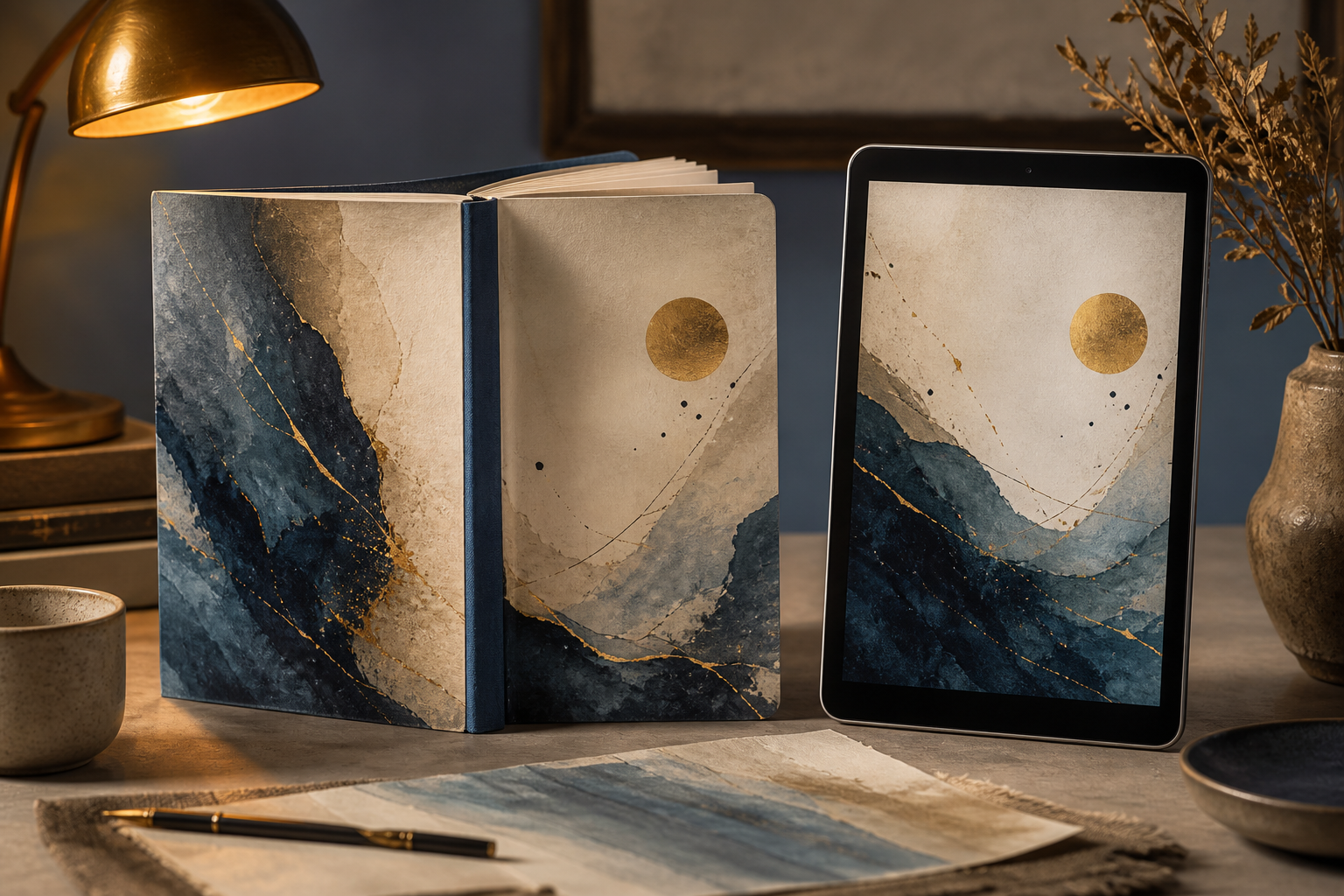
1. Why use Nano Banana / Nano Banana Pro for book covers?
Nano Banana standard is ideal for “try 5 genre moods first”; when you need readable thumbnails, usable title space, and a coherent series, switch to Nano Banana Pro:
| Capability | DIY collage / basic gen | Nano Banana / Nano Banana Pro |
|---|---|---|
| Thumbnail punch | Details blur into mush | Natural language for “subject readable at small size” |
| Title negative space | Frame packed — hard to overlay type | Fixed upper/lower third safe zones |
| Series unity | Every volume has its own palette | Fixed palette and style anchors |
| Multi-spec export | Manual crop breaks composition | Kindle portrait / print jacket / landscape promo |
| Revision speed | Wait for designer availability | “Darker mood, larger safe space” conversational iterate |
The core difference: in the workflow on the Nano Banana official website, a cover is not “one pretty illustration” — it is a reusable publishing visual asset.
2. Asset prep checklist (what decides whether it “feels like this book”)
Before opening Nano Banana or Nano Banana Pro, prepare:
- Genre keywords (required): Type (mystery / romance / business / kids) + one core motif
- Reference (optional): Mood board or old cover — lock atmosphere, do not copy layout
- Style direction (required): Literary minimal, commercial bestseller, fantasy illustration, knowledge-product clean — pick only one
- Use cases: Kindle/ebook store, print jacket, series set, social teaser
- Platform specs: Ebooks often tall ~1600×2560 ratio; print needs bleed awareness; landscape promo 16:9
- Negative constraints: Do not bake book titles into the image; no garbled text; no watermark; no copyrighted characters
Tip: Learn the difference between Nano Banana and Nano Banana Pro on the Nano Banana official website, then generate cover art in the web app. Larger subject and clearer negative space make store thumbnails more “tap-worthy.”
3. Four-step workflow (genre → store-ready cover)
Step 1: Enter Nano Banana Pro and lock cover intent
- Open Nano Banana web app
- Use Nano Banana to explore mood; prioritize Nano Banana Pro for finals
- Write clearly:
leave clean negative space for title typography; no baked-in book title text
Step 2: Choose a cover template
Three complete prompts below:
- Template A: Ebook tall cover art (~5:8, thumbnail-first)
- Template B: Print jacket composition (bleed-aware + spine-side quiet margin)
- Template C: Series palette-matched set (multi-volume recognition)
Step 3: Five checks before publishing
- At phone store thumbnail size, is the subject still recognizable?
- Is there enough top/bottom space for title and author name?
- Was a book title accidentally baked into the image (hard-to-fix garbled text)?
- Do series volumes share palette and style like one set?
- Any watermark, garbled text, malformed hands, or copyrighted characters?
Step 4: Natural-language iteration + export by channel
Common instructions:
- “Keep the genre; enlarge upper negative space for the title overlay”
- “Cooler tone — more mystery”
- “Remove all text from the image”
- “Export tall portrait 4K, Nano Banana Pro”
4. Prompt Template A: Ebook tall cover
Replace 【】 placeholders with your content, then paste the full block into Nano Banana Pro:
Ebook store cover art, tall portrait ~5:8, thumbnail-first.

Subject: 【核心意象:雨夜窗边的空椅子 / 霓虹巷口的钥匙 / 山间独行者剪影】 for genre 【悬疑 / 言情 / 商业 / 奇幻】.

Composition: strong focal subject in lower two-thirds OR center; keep UPPER third as clean negative space for future title typography. No baked-in book title, author name, or fake barcodes.

Lighting & mood: 【冷调悬疑 / 暖调治愈 / 高对比畅销】; cinematic but readable at small size.

Style: Market-ready ebook cover illustration/photo hybrid, Nano Banana Pro clarity, print-safe contrast.

Negative constraints: no readable text, no watermark, no logo mashups, no copyrighted characters, no crowded clutter in title zone.

Output: tall portrait, 4K, Nano Banana Pro ebook cover.
Usage
- Fill genre motif and type
- Stress upper negative space
- Shrink to store thumbnail size for QA
- Iterate: “larger safe space” / “stronger contrast”
5. Prompt Template B: Print book jacket composition
Print book front cover artwork, portrait orientation with bleed-aware margins.

Concept: preserve genre mood 【文学极简 / 商业畅销 / 少儿明亮】; hero visual 【单一强符号】 centered or rule-of-thirds.

Safe areas: leave quiet margins near top and spine-side for later title / series logo overlay; do not place critical details at extreme edges.

Look: hardcover jacket ready, Nano Banana Pro recommended for edge detail and color stability.

Lighting: controlled studio or soft atmospheric light matching 【纸质书货架观感】.

Negative constraints: no baked-in typography, no watermark, no barcode graphics, no muddy low-contrast mud.

Output: portrait cover art, high resolution, Nano Banana or Nano Banana Pro.
For print, “edge safety + enough contrast” matters more than “wall-to-wall detail fireworks”; shelves first reward far-view recognition.
6. Prompt Template C: Series palette-matched set
Book series cover system, matching set look.

Shared anchors: identical color palette 【深蓝+琥珀 / 米白+墨绿 / 黑金】, same art style, same lighting family across volumes.

Volume difference: change only the hero prop/scene beat 【卷一钥匙 / 卷二地图 / 卷三风暴】 while keeping composition template consistent.

Typography space: reserved clean band at top or bottom for titles later; no text in image.

Style: Series-ready publishing visual, Nano Banana Pro consistency across volumes.

Negative constraints: no palette drift between volumes, no random style jump, no watermark, no baked-in volume numbers unless requested as empty badge shape only.

Output: portrait, 4K, Nano Banana Pro series covers.
Series volumes share one identity library (palette + composition template) — after listing, they read as “one author universe.”
7. Negative space & series tips (cover-specific)
In Nano Banana / Nano Banana Pro prompts, lock these rules:
- Ban baked text first:
no baked-in book title text - Change one class per round: Do not heavily alter motif + grade + safe space together
- Thumbnail first: QA at store thumbnail size before chasing detail
- Series anchors: Fix palette and composition template; swap only the hero prop
- Safe zones: Reserve upper or lower third for title/author
- Reject poster look: Write
book cover, not event poster, not social ad collage
Append these as “Cover rules: …” at the end of your prompt — cover series stay much more stable.
8. Three real case breakdowns
Case 1: Web-fiction mystery ebook with low CTR
- Goal: Thumbnail unreadable; looked like generic art
- Flow: Template A + strong silhouette motif + upper safe space
- Result: Nano Banana Pro improved thumbnail punch while keeping type overlay room
Case 2: Knowledge-product print book looked gray
- Goal: Low contrast; invisible on shelves
- Flow: Template B — raise contrast and edge safety
- Result: Cleaner print proof; title zone not eaten
Case 3: Three-volume series did not look like one set
- Goal: Palette and style drifted per volume
- Flow: Template C — fixed palette; swap only volume props
- Result: Series recognition unified; volume themes still distinct
9. Common mistakes & how to avoid them
| Common mistake | Why it fails | How Nano Banana avoids it |
|---|---|---|
| Prompt includes the book title | Garbled text; hard to localize | Explicitly no baked-in title text |
| Frame packed with detail | Tiny thumbnail mush; no type room | Force upper/lower negative space |
| Looks like an event poster | Wrong store category feel | Write book cover, not event poster |
| Style changes every volume | Readers do not recognize the set | Fix palette and composition template |
| Critical details at edges | Print crop losses | Bleed-aware + quiet margins |
| Finalize on standard | Contrast and edges blur easily | Finalize on Nano Banana Pro |
10. Nano Banana vs Nano Banana Pro — which to pick
| Scenario | Recommended | Why |
|---|---|---|
| Try 5 genre moods | Nano Banana | Fast exploration |
| Ebook store final | Nano Banana Pro | Thumbnail clarity more stable |
| Print jacket final | Nano Banana Pro | Better edges and color stability |
| Three-volume series unity | Nano Banana Pro | Consistency matters more |
| Daily cover drafts | Nano Banana | Direction first, then Pro polish |
11. Quick start in three steps
- Open Nano Banana official website to learn the product, enter the web app, and write a clear genre motif
- Copy Template A or C, stress negative space and
no baked-in book title text - Iterate with short instructions, then export tall cover / print composition / series set
12. Closing thought
The essence of a book cover is not “a pretty illustration alone” — it is making readers want to tap the thumbnail and recognize the same series on a shelf. Explore genre with Nano Banana, lock negative space and palette and export by channel with Nano Banana Pro, and on the Nano Banana official website in one workflow you can turn genre keywords into publishable cover assets.