Published:2026-09-16
Keywords:Nano Banana Pro, Nano Banana, Nano Banana official website, Pitch Deck, investor pitch slides, nanobanana prompts
Founders, sales leads, and product managers all know this: when investors flip through a Pitch Deck, what decides whether they “want to keep listening” is rarely page 8 of the financial model — it is whether the first three slides look professional and the whole deck feels like one brand. If the cover hero, problem slide, solution slide, data plate, and team page drift in style, the narrative breaks. Many teams send the cover to a designer, the charts to an analyst, and team photos to yet another retoucher — aligning three pipelines often burns a full week.
This guide is different from past “LinkedIn carousel personal brand,” “poster infographic layout,” or “online course LMS cover” topics. It solves one job only: how to enter the creation app from the Nano Banana official website, then use Nano Banana / Nano Banana Pro to ship a pitch-ready, proposal-ready Pitch Deck visual kit in half a day — covering hero covers, quiet data-slide plates, and team portrait plates without outsourcing three separate visual chains.
You will get: an 8-slide kit planning table, a full asset checklist, a four-step workflow, three complete English prompt templates (placeholders you can swap), aspect-ratio and safe-zone guidance, three case breakdowns, a pitfalls table, and selection advice for Nano Banana versus Nano Banana Pro. No prompt bodies are shortened here — the seed injects the full English templates so you can paste and ship.
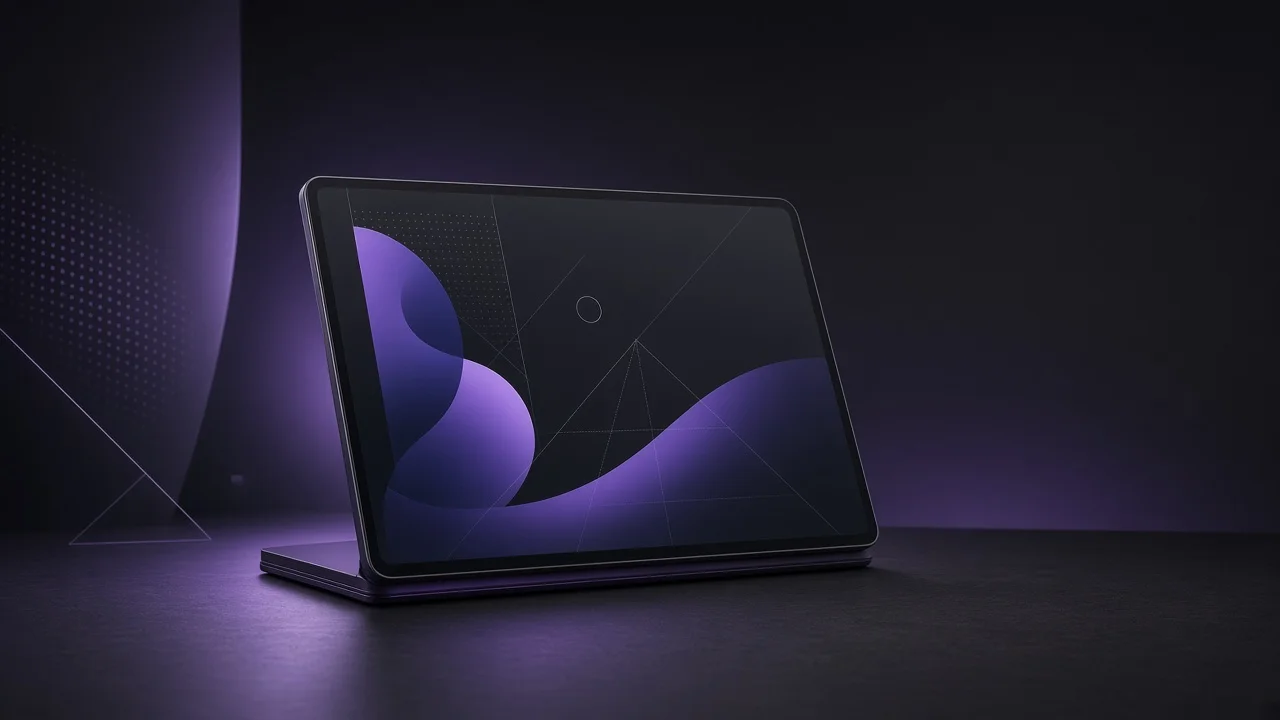
1. Why use Nano Banana / Nano Banana Pro for Pitch Deck visuals?
Traditional outsourcing splits cover, data plates, and portraits across vendors; stock templates look generic under a conference projector. On the Nano Banana official website workflow, Nano Banana is ideal for exploring composition volume fast, while Nano Banana Pro locks brand color, face/product identity, and headline-safe zones for finals. Compare the capability matrix below before you spend credits:
| Capability | Traditional outsourced mix | Nano Banana / Nano Banana Pro |
|---|---|---|
| Cover hero composition | Long queue; one revision waits a day | Natural language to try 5 directions fast; Pro locks brand color & subject more stably |
| Data / info-slide plate | Designer opens a separate layout ticket | Clean negative-space sketches; Pro clarifies short-title safe zones and hierarchy |
| Team / product-page consistency | Multi-vendor style drift | Reuse one prompt skeleton; Pro face/product identity fidelity suits finals |
| Version unity | PPT template and illustrations feel disconnected | Same palette and composition anchors; same-account workflow stays coherent |
| Entry & learning curve | Scattered tools and briefs | Nano Banana official website guides + cases; Pro pillar pages explain selection |
One-liner: use Nano Banana to explore composition and volume; use Nano Banana Pro to lock brand color, face/product identity, and title safe zones for finals. For decisions and entry points, start with the Nano Banana and Nano Banana Pro product pages on the official site; credits and plans live on the pricing page. Pitch Deck visuals are not “random nice stock” — they are a reusable investor-pitch visual system.
2. Pitch Deck visual kit plan (recommended 8 base slides)
Before you dump stock photos into PPT, define “the visual job of each slide” in a table — it saves credits and keeps the narrative coherent across investor pitch, sales proposal, and product-launch decks:
| # | Visual type | Purpose | Recommended model |
|---|---|---|---|
| 1 | Cover hero | First impression & brand memory point | Nano Banana Pro |
| 2 | Problem / pain atmosphere | Make the pain feel real to the room | Nano Banana / Pro |
| 3 | Solution product hero | Product or demo as the main subject | Nano Banana Pro |
| 4 | Market / opportunity metaphor | Visualize abstract opportunity (not fake data charts) | Nano Banana Pro |
| 5 | Quiet data-slide plate | Large negative space left for real charts & numbers | Nano Banana Pro |
| 6 | Customer scene / use-case | Who benefits in which context | Nano Banana / Pro |
| 7 | Team portrait unified plate | Multi-person portrait zone with consistent style | Nano Banana Pro |
| 8 | Closing CTA / contact atmosphere | Professional close without stealing focus from QR/contact | Nano Banana Pro |
Official-site tip: On the Nano Banana official website, open Showcase and the prompt guide first — bookmark “clean commercial illustration / product hero” cases, then enter the creation app. That is faster than inventing a deck look from zero. This kit is built for Pitch Deck / investor pitch / sales proposal / product launch slides, not LinkedIn carousels, LMS covers, or poster infographics.
3. Asset prep checklist (what decides whether the whole deck “feels like one brand”)
Before you open the creation app, prepare the following. Skipping this step is the #1 reason decks look like three different agencies glued together:
- Brand reference (required): Clear Logo silhouette; primary and secondary colors written as English color names or hex descriptions
- Product / UI reference (recommended): Physical product or UI screenshot as Image 1 — demand “do not redesign the SKU / do not scramble the interface”
- Team portrait references (if you need a team page): One clear half-body photo per person; lighting as similar as possible across the set
- Narrative tone keywords: Investor pitch / sales proposal / product launch — pick only one tone and write it into the style description
- Aspect ratio & safe zone: Common 16:9; reserve the top or left 25%–35% as clean negative space for titles
- Negative constraints: no watermark, no fake charts with unreadable numbers, no melted text, no random stock faces
You do not need to draw frames inside PPT first. Nano Banana Pro can leave a headline-safe zone from the description alone; the cleaner the background, the more stable later typography overlays. Treat this checklist as the “brand system brief” for the entire Pitch Deck kit.
4. Four-step workflow (from official site to pitch-ready)
Step 1: Enter creation from the Nano Banana official website
- Open Nano Banana creation app
- Prioritize Nano Banana Pro for cover, team pages, and slides that need a short-title safe zone; use Nano Banana for pure atmosphere exploration
- Upload brand/product as Image 1 (for portrait pages, upload each person’s reference separately)
Step 2: Pick templates by kit order
The seed injects three copy-ready English prompt skeletons below (do not invent shortened stubs — paste the full blocks):
- Template A: Cover hero / opening slide (16:9, large headline-safe zone)
- Template B: Quiet data-slide plate (negative space reserved for charts)
- Template C: Team-page unified portrait plate (identity lock)
Step 3: Run a “pitch check” after generation
- At thumbnail size, can you still recognize brand color and the main subject?
- Is the headline-safe zone large enough — not filled with complex texture?
- Are face / product edges intact with no melt or warp?
- Are color temperature and composition language unified across the full kit?
- Any fake readable-number charts, watermarks, or garbled baked-in text?
Step 4: Iterate with short follow-ups + export per slide
Iterate with short conversational tweaks, then export 16:9 and overlay real type and charts in PPT / Keynote / Google Slides. Common follow-ups:
- “enlarge headline safe zone”
- “keep brand purple #8b5cf6”
- “remove decorative icons”
- “simpler background, larger clean negative space for charts”
- “preserve facial likeness 100%, same light direction as previous teammate”
After finals, export at 16:9 (4K when projecting on large screens), then composite real metrics in your deck tool. For failure patterns and fixes, use the Failures page and the common-failures blog on the Nano Banana official website — do not burn credits re-learning the same mistakes.
5. Prompt Template A: Cover hero / opening slide
Subject: Pitch deck title slide hero. Preserve brand identity from Image 1 100% — logo silhouette, primary colors, and product shape if present. Do not invent a different brand.

Composition: Widescreen 16:9. Place the hero subject on the 【left third / right third】. Leave a large clean headline-safe zone on the opposite side (about 30–40% width) for future title/tagline typography — no baked-in garbled text.

Style: 【investor pitch / sales proposal / product launch】 tone; premium SaaS / startup deck look; high contrast when projected on a conference screen.

Lighting: Soft studio key + gentle rim; controlled specular; avoid muddy midtones.

Negative constraints: no watermark, no fake charts, no unreadable micro-text, no random stock faces, no cluttered icons.

Output: 16:9, 4K, Nano Banana Pro pitch deck cover hero.
How to use
- Upload Logo or product reference as Image 1
- Paste the full English block, fill tone (investor pitch / sales proposal / product launch) and safe-zone side
- If the background is too busy, follow up with “simpler background, larger headline zone”
- Before locking, preview fullscreen / projected — check readability under conference lighting
6. Prompt Template B: Quiet data-slide plate
Layout: Quiet pitch-deck data-slide background, 16:9. Preserve brand accent color from Image 1 as a subtle motif only (corner glow, thin geometric line, or soft gradient) — do not redraw fake bar charts with numbers.

Composition: Keep 60–70% of the frame as calm negative space for future charts and labels. Subject/motif stays in 【bottom-right / left margin】 and must not compete with center content.

Style: Minimal corporate deck plate, Nano Banana Pro clean commercial illustration, printable and projector-friendly.

Lighting: Even, low-drama; no harsh vignette that hides axis labels later.

Negative constraints: no fake readable statistics, no melted numbers, no watermark, no dense isometric city spam, no stock photo collage.

Output: 16:9, 4K, Nano Banana or Nano Banana Pro data-slide plate.
Learning point: a data slide needs a quiet plate, not “another fake chart.” Numbers and axes belong in PPT with real data. If you only want a fast palette test, start with Nano Banana, then switch to Nano Banana Pro for the final plate. Never ask the model to invent readable statistics — that creates compliance risk and kills investor trust.
7. Prompt Template C: Team-page unified portrait plate
Portrait plate for pitch-deck team slide, 16:9 or 1:1 crop-friendly.

Identity: Use uploaded Image 1 as the exact person — preserve facial likeness, hair, skin tone, and proportions 100%. Nano Banana Pro recommended for face lock.

Composition: Chest-up professional portrait with soft brand-color backdrop 【soft lilac / charcoal / warm cream】; leave lower-third or side strip clean for name/title overlay later (no baked-in names).

Style: Consistent series look for 3–5 teammates; same light direction and backdrop language across the set.

Lighting: Soft corporate key light, gentle fill, no beauty-filter plastic skin.

Negative constraints: no face swap, no watermark, no garbled name tags, no mismatched wardrobe eras, no heavy bokeh that eats shoulders.

Output: 16:9 or 1:1, 4K, Nano Banana Pro team portrait plate.
Learning point: unify light direction + backdrop color + crop first, then generate person by person — that looks like “one team,” not a collage of stock faces. For more identity-consistency craft, see the professional headshot guide and prompt-pack collection on the Nano Banana official website. Prefer Nano Banana Pro whenever faces must lock for finals.
8. Aspect ratio, safe zone & export recommendations
| Use case | Recommended ratio | Notes |
|---|---|---|
| Standard pitch PPT / Keynote | 16:9 | Default for cover and data plates |
| One-pager print summary | 16:9 or 4:3 | Leave wider margins |
| WeChat / email share preview | 16:9 or 1.91:1 | Brand still readable at thumbnail size |
| Team-page avatar crop | 1:1 spare | Crop from the 16:9 portrait plate |
| Large-screen projection | 16:9 4K | Avoid low-contrast texture backgrounds |
Even after export, preview in the target projection environment. Many “looks premium on a laptop, goes muddy on the wall” issues come from contrast and safe-zone packing — not from resolution alone. Keep midtones projector-friendly and protect the headline zone.
9. Three case breakdowns (copy the structure)
Case 1: SaaS seed-round Pitch Deck
- Goal: Cover locks brand purple; data plate leaves room for ARR curves; three teammate portraits unified
- Approach: Template A (product left, title zone right) → B (soft geometry bottom-right) → C (same charcoal backdrop)
- Result: Investors said “this looks like a team that actually built a brand system”
- Learn: Never cram fake dashboard numbers onto the cover; put real metrics in the PPT chart layer
Case 2: Sales proposal deck
- Goal: Customer-scene slides feel real, not exaggerated; solution-page product labels stay readable
- Approach: Explore scenes with Nano Banana; lock product hero labels with Nano Banana Pro
- Result: Proposal PDF and live PPT stay visually consistent
- Learn: Sales decks need a “credible” tone — skip over-the-top sci-fi glow effects
Case 3: Product-launch opening deck
- Goal: Opening hero works on stage LED; closing CTA page does not compete with the QR code
- Approach: Template A with higher contrast; closing page with larger negative space
- Result: On-site photos / screen recordings still show a recognizable Logo at thumbnail size
- Learn: LED walls crush darks — do not push midtones too low in the plate
10. Common mistakes & how to avoid them
| Mistake | Consequence | Fix |
|---|---|---|
| Cram fake data charts onto the cover | Looks like template-site stock; not credible | Cover = hero + title zone only |
| Headline-safe zone filled with texture | Overlay text blooms; hard to read when projected | “larger clean headline-safe zone” |
| Color temperature jumps across the kit | Does not feel like one brand | Fix primary-color description + same light direction |
| Team-page face drift | Investors break immersion | “preserve facial likeness 100%” + Nano Banana Pro |
| Data plate generates “readable numbers” | Wrong numbers + compliance risk | Plate only; numbers from real data in PPT |
| Finalize portraits on standard only | Faces and shoulder lines go soft | Switch cover / portraits to Nano Banana Pro |
For systematic avoidance, cross-check Failures and Lab parameter experiments on the Nano Banana official website. Pitch Deck trust dies fastest when fake charts or drifted faces appear — treat those as hard stops before any investor meeting.
11. Nano Banana vs Nano Banana Pro: how to choose for Pitch Decks?
| Task | Better pick |
|---|---|
| Quickly try 5 cover compositions | Nano Banana |
| Cover final + brand-color lock | Nano Banana Pro |
| Quiet data-slide plate | Nano Banana / Pro |
| Unified team portraits | Nano Banana Pro |
| Learning entry & product explainers | Nano Banana official website pillar pages & blog |
Selection detail also lives in the Nano Banana vs Pro differences article and the official-site review on the {{SITE_LINK}}. Rule of thumb for decks: explore volume on standard, lock identity and safe zones on Pro, then composite real numbers offline.
12. Quick start in three steps (ship a pitch draft today)
- Open the Nano Banana official website → enter the creation app → upload brand/product → select Nano Banana Pro
- Run Template A (cover) → B (data plate) → C (team portraits) in order; run one pitch check per slide
- Export 16:9, drop into a PPT draft, overlay type and real data; for credits, see the free-trial guide and pricing on the official site
Closing
A Pitch Deck is not about “one magical image” — it is a reusable pitch visual system. Split cover, quiet data plate, and team portrait plates; explore with Nano Banana, finalize with Nano Banana Pro, and lean on guides, cases, and pricing explainers on the Nano Banana official website. You can stabilize visual quality for fundraising pitches, sales proposals, and product launches without adding another outsourced pipeline.
Next step: review verified before/after pairs in Showcase, download Resources template packs to bookmark prompt skeletons, then start today with this Pitch Deck workflow — open Nano Banana creation app and ship the first three plates.